How to Choose Pendant Lighting for Your Kitchen
Pendant lighting can add both practical light and personality to a kitchen. It can highlight an island, create a comfortable atmosphere around a dining area and introduce a decorative feature that brings the whole room together.
With so many shapes, sizes and styles available, choosing the right pendant lights comes down to a few key considerations. The size of your kitchen, the position of your furniture and the other lighting in the room can all help guide your decision.
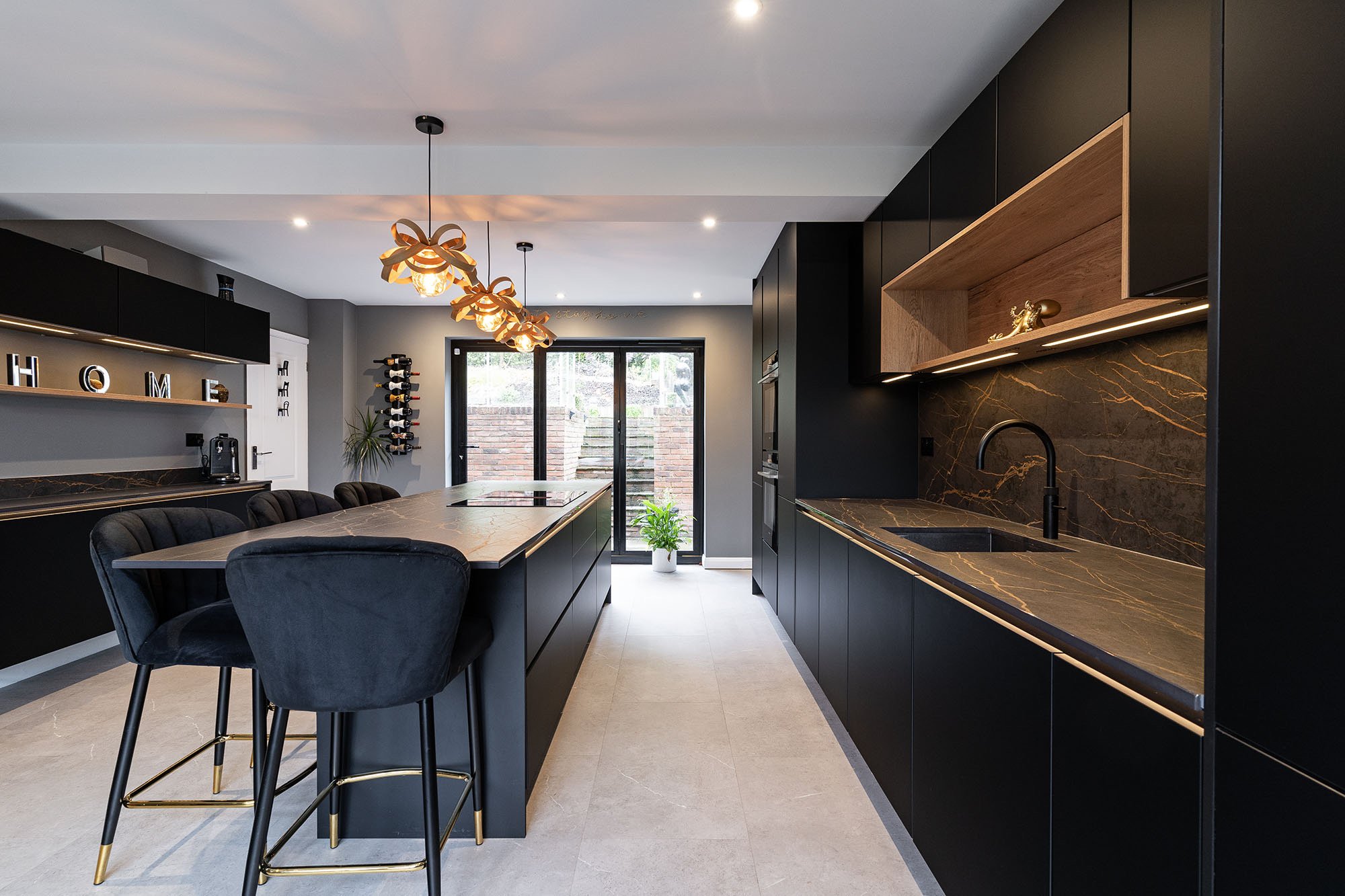
Here is what to consider when planning pendant lighting for your new kitchen.
Where should you use pendant lights in a kitchen?
Kitchen islands are one of the most popular places for pendant lighting. Pendants naturally draw attention to the island and can help define it as a central feature within an open-plan space.
They can work particularly well above island seating, creating a welcoming area for breakfast, coffee, homework and relaxed meals.
Pendant lights can also be positioned above a dining table, peninsula or breakfast bar. In larger open-plan kitchens, lighting can help visually define different zones while keeping the overall design connected.
How many pendant lights should you have over a kitchen island?
The ideal number depends on your island's length and the size of the lights.
Three pendants are a popular choice because they create a balanced arrangement across many kitchen islands. Two larger statement pendants can work beautifully too, particularly when you want the lighting to have a stronger visual presence.
A longer island may suit three or more smaller pendants, while a compact island could look perfectly proportioned with two.
Rather than choosing a number first, think about the overall proportions. The pendants should feel balanced with the island and have enough space between them to create an open, considered appearance.
What size pendant lights should you choose?
Pendant lights should complement the proportions of your kitchen.
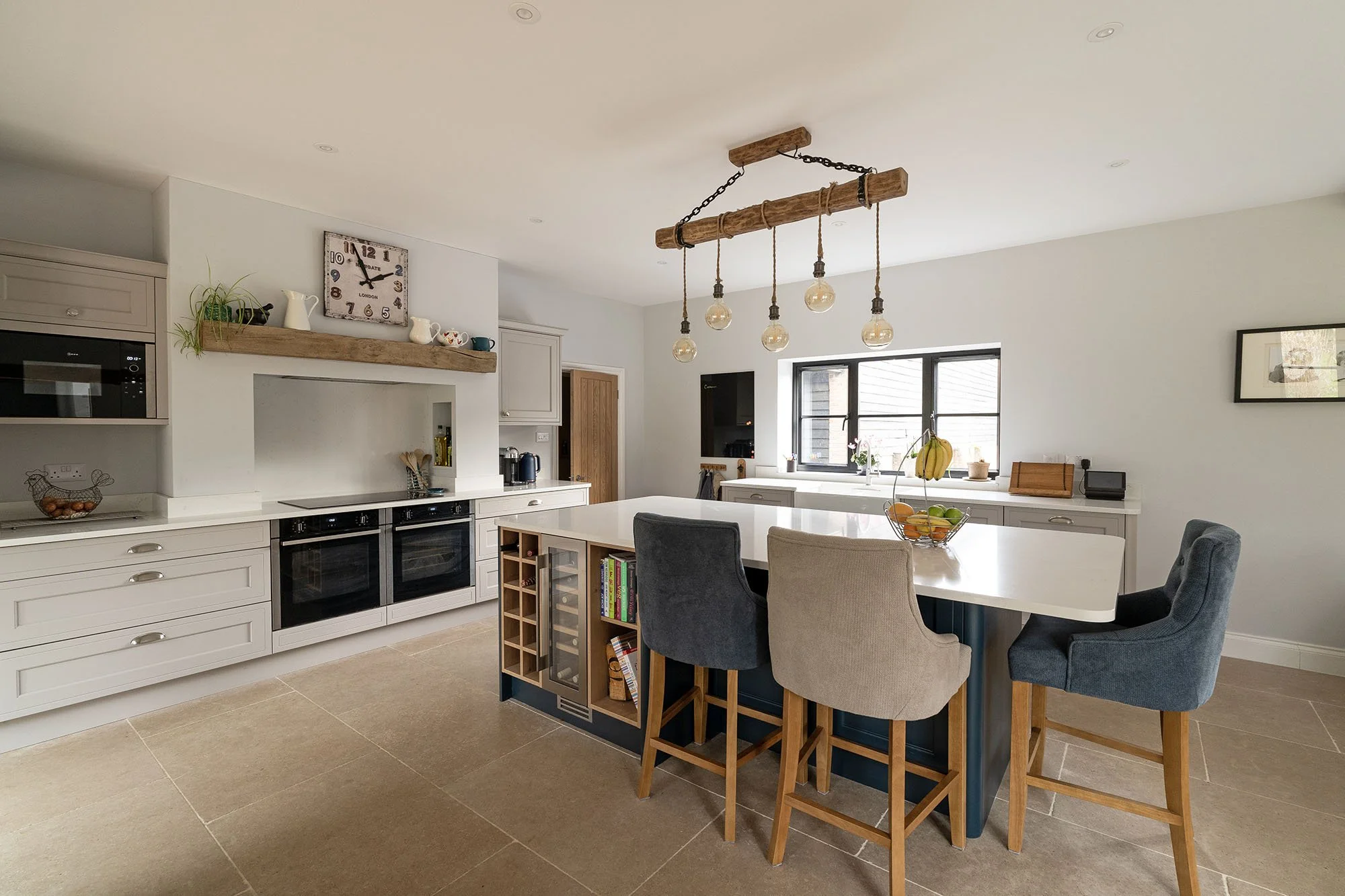
Large pendants can become an attractive focal point in a spacious room with a generous island and high ceilings. Smaller pendants can suit compact kitchens or schemes where you want the cabinetry, worktops or other design details to take centre stage.
The visual weight of the pendant matters too. A large glass pendant can feel light and open, while a solid metal shade of the same size can have a stronger presence.
Looking at the whole kitchen design will help you find the right balance.
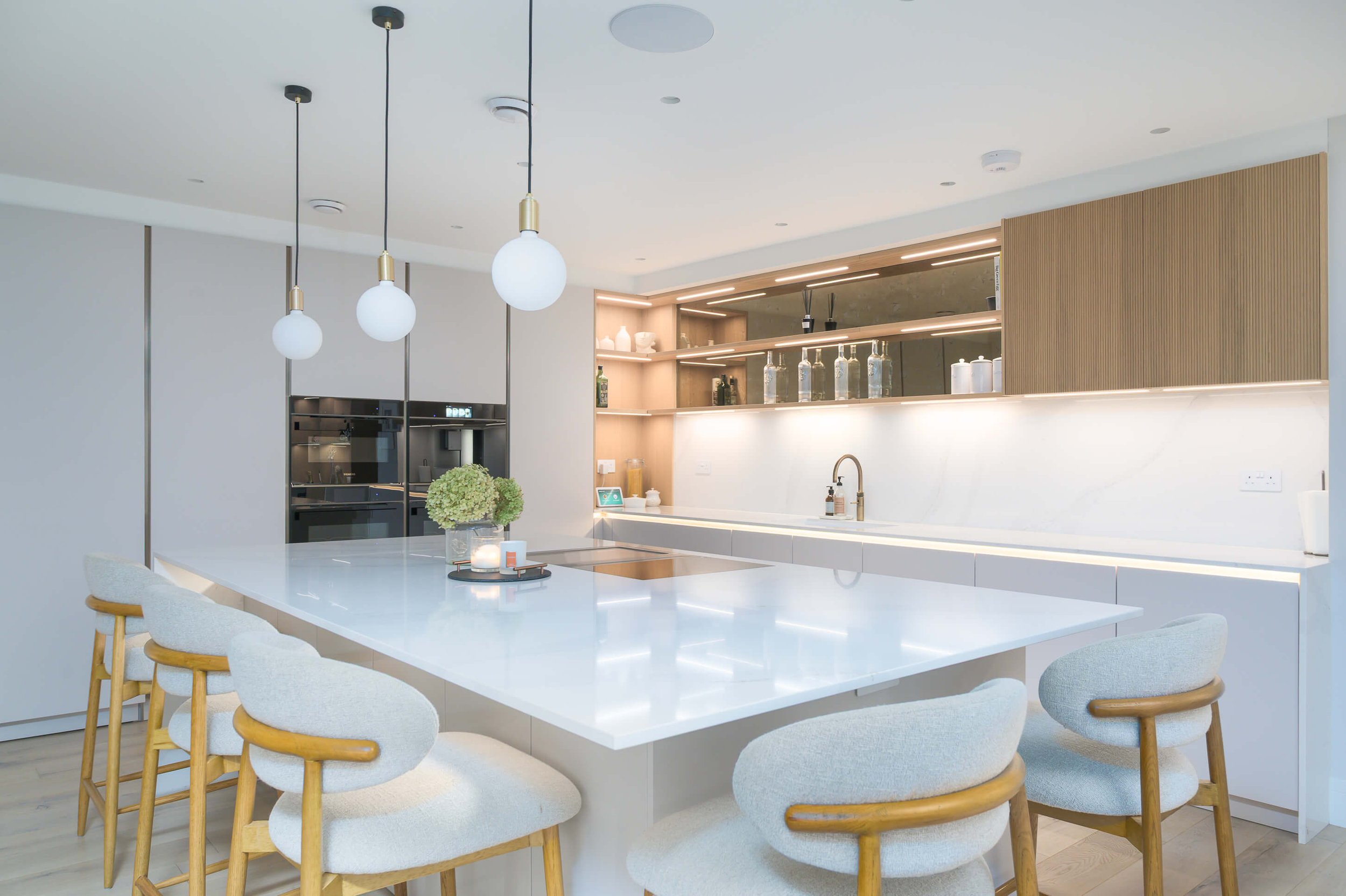
How high should pendant lights be above a kitchen island?
Pendant lights are usually positioned high enough to keep views across the kitchen open while still providing useful illumination over the surface below.
Your ideal height will depend on the ceiling, pendant design, island and people using the space. Adjustable pendants can be particularly useful because the height can be refined during installation.
This is also worth considering early in your kitchen design. Planning the island, lighting points and ceiling details together creates a more coordinated finished result.
Choose a pendant style that complements your kitchen
Pendant lighting is an opportunity to introduce another material, shape or finish into your kitchen.
For contemporary kitchens, simple glass, metal or sculptural pendants can complement clean cabinetry and handleless designs. Traditional and Shaker kitchens can work beautifully with softer shapes, classic glass shades and warm metallic finishes.
You can also use your lighting to connect other elements within the room. Brass pendants, for example, can complement brass handles or taps, while black lighting can coordinate with appliances, window frames or cabinet details.
Your pendants can either blend gently into the design or become a statement feature. Both approaches can work beautifully when they are considered as part of the wider scheme.
Consider the colour temperature
The appearance of kitchen lighting is influenced by the colour temperature of the bulbs as well as the pendant itself.
Warm white lighting can create a comfortable, inviting atmosphere, particularly around an island or dining space. A brighter light can provide useful illumination in areas used for preparing food and other everyday tasks.
Layering different types of lighting gives you greater flexibility. Pendant lights can sit alongside ceiling lighting, under-cabinet lighting and integrated lighting to create different levels of brightness throughout the day.
Plan your kitchen lighting as part of the overall design
The most successful kitchen lighting schemes are planned alongside the kitchen itself.
Considering pendant positions early means they can align beautifully with your island, cabinetry and furniture. It also gives you the opportunity to think about ceiling heights, electrical points and how your pendant lighting will work with the rest of the room.
At Ridgeway Interiors, our designers consider the complete space when creating your kitchen, helping you bring together cabinetry, worktops, appliances, lighting and finishing details into one cohesive design.
Visit our Thame, Gerrards Cross or Aylesbury showroom, or book a design appointment to start planning your new kitchen.